
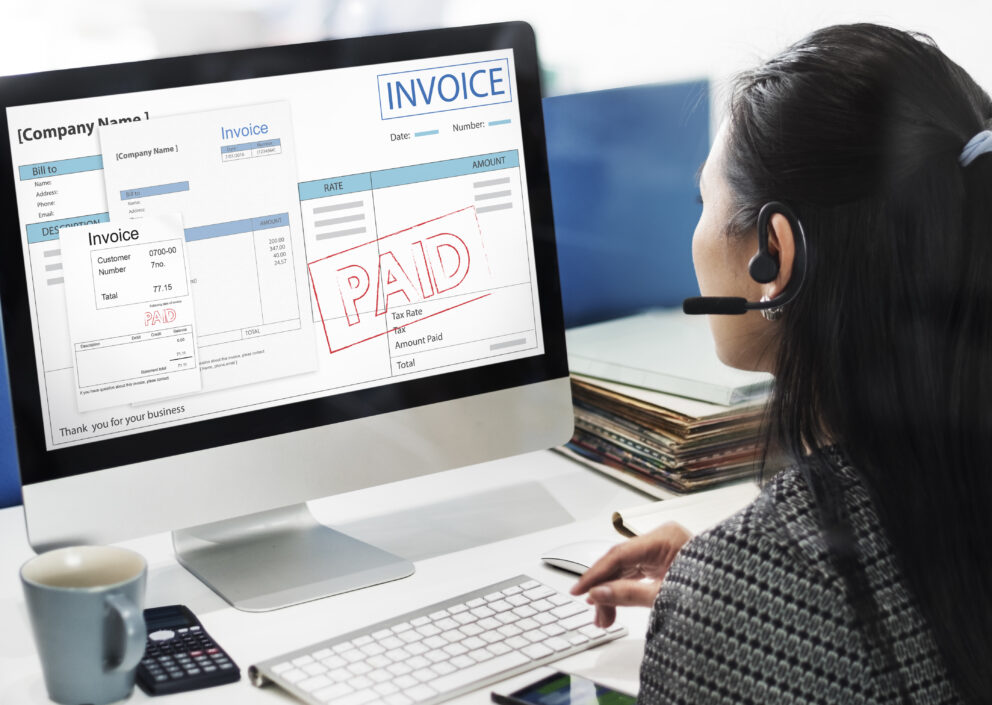
In regular commercial transactions, the phrases “invoicing” and “billing” are frequently used interchangeably. While both deal with requesting and receiving money, their functions, structures, and timeliness differ.
Understanding the distinction between invoicing and billing is critical for maintaining clear communication, correct financial records, and seamless operations, whether you’re a freelancer, a small business owner, or in charge of enterprise-scale transactions.
In this article, we’ll go over the differences between invoicing and billing, as well as when to use them.
What Is Invoicing?
An invoice issued by a seller to a buyer after goods or services are delivered. It is considered an official request for payment, with item descriptions, quantities, pricing, taxes, and payment terms usually included. Invoices are commonly used in B2B transactions and are regarded as an important part of accounting and taxation.

What Is Billing?
A bill, on the other hand, is a simple document that tells the consumer how much money they owe, typically at the time of sale. Bills are prevalent in business-to-consumer (B2C) transactions such as shopping, dining out, and using a paid service. Bills, unlike invoices, are due immediately and contain less precise information.
The Difference Between Invoicing and Billing
Let’s break down the core differences between invoicing and billing in detail:
Purpose and Function
An invoice is considered a formal request for payment and is commonly used for record keeping, audit trails, and structured transactions. A bill is described as a simple charge notice that is designed to rapidly inform the consumer of the amount owed.
When It Is Issued
Invoices are sent after goods or services are provided, with payment due within a certain credit period (e.g., net 15 or net 30). Bills are presented during or shortly after a transaction, with the expectation of rapid payment.
Level of Detail
Invoices feature detailed information such as item descriptions, quantities, unit prices, taxes, discounts, subtotals, and the total amount payable, as well as payment instructions.
Bills are concise, usually displaying only the total amount, basic item detail, and date—enough for a speedy payment.
Audience and Use Case
In B2B situations, invoices are primarily used to provide formal documentation for compliance, accounting, and ongoing connections. Bills are utilized in B2C environments such as restaurants, retail stores, clinics, and online checkouts, where transactions are quick and simple.
Record-Keeping and Formality
Invoices are considered official papers that are kept for both legal and tax purposes.
Bills are less formal and are rarely utilized after payment, unless the consumer needs to track expenses.
Payment Terms
Invoices specify payment terms such as due dates, penalties for late payments, and approved payment methods. Bills do not include conditions; instead, they require the customer to pay promptly, typically with cash, credit card, or UPI.
Terminology by Context
The term “invoicing” is commonly used in areas such as consulting, software services, logistics, and wholesale trade. “Billing” is common in industries such as hospitality, healthcare, retail, and subscription services.
Software Usage
Business accounting systems frequently include advanced invoicing features, including invoice tracking, repeating invoices, payment reminders, and multi-currency compatibility.
Billing capabilities are more focused on Point of Sale (POS) systems, receipt creation, and quick checkout procedures.
Conclusion: Why It Matters
Understanding the distinction between invoicing and billing is more than just using the correct terminology; it is about enhancing how you manage your organization.
Assists in selecting appropriate accounting and billing software
It keeps your business legally and financially compliant.
Streamlines internal operations and payment tracking.
It improves communication with clients and customers.