In today’s competitive market, price flexibility can make or break a deal. Whether you run a retail store, a wholesale operation, or a service-based firm, having a multi-price list function in your accounting software is no longer optional—it’s required.
This article discusses the importance, benefits, and applications of multi-price lists, as well as how incorporating this feature can transform your pricing approach.
What is a multi-price list?
A Multi-Price List feature enables businesses to charge varying rates for the same product or service based on customer segments, locations, order volumes, or any other relevant metric.
For example:
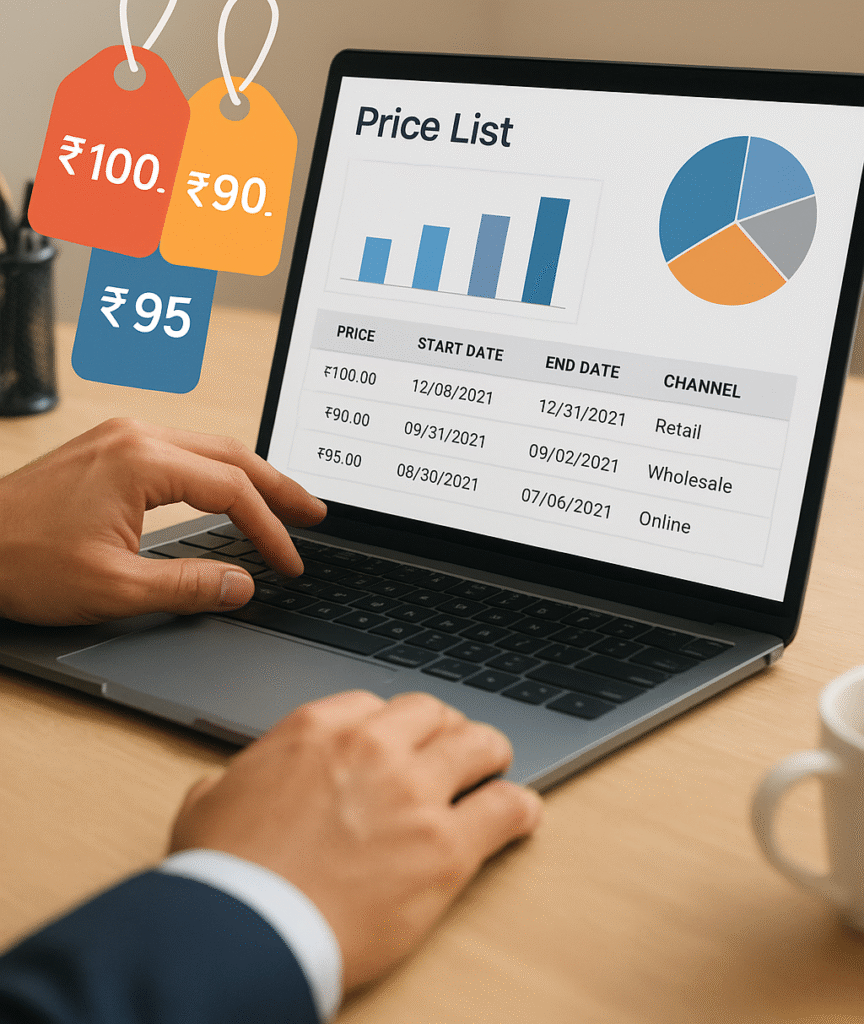
- Retail price: ₹100.
- Wholesale Price: ₹90.
- Online Price: ₹95.
- Loyal customer price: ₹85.
All of these can be easily controlled utilizing a single accounting system with a multi-price list function.
Why is Multi-Price List Important?
Without this capability, firms frequently manually change prices, resulting in:
- Inconsistent pricing
- Human errors.
- Poor client experience.
- Delayed invoices
Using the multiple pricing list approach, you can:
- Automate pricing according to customer categorization.
- Reduce mistakes.
- expedite the billing process
- Maintain consistency between branches or platforms.
Key Benefits of Multi-Price Lists in Accounting Software
- Customer-specific pricing: Individual consumers or customer groups (such as wholesalers, retailers, and VIP clients) can be assigned a specific price list.
- Channel-Based Pricing Manage varying rates for:
- Offline stores
- Online platforms
- Third-party sellers.
Each channel can have its own price list for greater control.
- Seasonal or Promotional Prices
- Easily change pricing lists for:
- Festivals
- Seasonal sales.
- Clearance discounts.
You can specify the start and end dates for each promotional price list.
Geographic Pricing
Set rates according to region or country. This is a must-have for firms dealing with various tax slabs, freight prices, and market dynamics.
Bulk Order Pricing
Provide better rates for bulk purchases by including price breaks (quantity-based discounts) in the price list.
Increased profit margins
Customizing price lists allows you to better manage your cost-to-profit ratio and maximize margins for each market group.
How It Works in a Typical Accounting Software
- Create many price lists based on your business logic (for example, retail, wholesale, B2B, and VIP clients).
- Assign Price Lists to Customers: When creating or updating a customer, associate a price list with each customer or group.
- Automated Invoicing: When you create an invoice, the system automatically selects the price from the designated price list.
- Real-Time Updates: When you update one price list, it is immediately reflected in all linked sales, quotes, and billing.
Use Cases for Multi-Price List Features
- Retail chains have different prices in metro centers and rural locations.
- Manufacturers offer tiered pricing to distributors, wholesalers, and direct purchasers.
- Service providers’ pricing varies depending on the service level or contract conditions.
- Exporters should manage pricing in several currencies while taking into account local taxes
Features to Look for in Multi-Price List Accounting Software
- Easy price list creation and editing
- Customer/group-based price assignment
- Region/currency/tax slab compatibility
- Date-based validity (start/end dates) –
- Integration with quotations, sales orders, and invoices
Why Choose Accounting Software with Multi-Price List Support?
Accounting software with this feature does more than just manage prices; it also allows for strategic selling, smarter inventory turnover, and delighting consumers with individualized pricing.
Instead of using laborious spreadsheets or frequently changing prices, employ automation to:
- Save time.
- Avoid mistakes.
- Increase consumer loyalty.
- Scale your business seamlessly.
Conclusion
The Multi Price List feature is an effective tool in a world where tailored pricing and market adaptation are critical for staying competitive. Whether you’re a little firm or an enterprise-level corporation, having this capability in your accounting software ensures that you’re adaptable, competitive, and prepared for market problems.